
In the early 2000s, Dell Computer Corporation revolutionized the technology sector not by building better hardware, but by building a better supply chain. They mastered the art of eliminating friction—cutting out the middleman, delivering directly to order, and ruthlessly stripping away unnecessary inventory costs.
While a South African retail franchise operates in a vastly different physical environment than a global computer manufacturer, the underlying operational mathematics are identical: Friction equals cost.
What is Retail Friction?
Retail friction occurs whenever a product, an employee, or a customer is forced to stop, wait, or deviate from the most efficient path. Friction looks like:
- A receiving bay congested with unsorted boxes, delaying merchandise from hitting the sales floor.
- Cashiers leaving the till point to check a price because barcoding standards were skipped during receiving.
- Customers abandoning baskets because the queue layout is confusing and slow.
Pillar 1: Efficient Management of People
The first application of the Dell Principle in retail is developing a culture and training matrix focused entirely on the most low-cost, efficient methods of executing tasks. This does not mean paying people less; it means ensuring the hours you are paying for yield maximum output.
If a store manager spends 4 hours a week manually tallying inventory because the digital inventory management system isn't trusted, that is a massive friction point. DRE's training methodology isolates these inefficiencies and replaces them with standardized, trusted Standard Operating Procedures (SOPs).
Pillar 2: Efficient Transactions
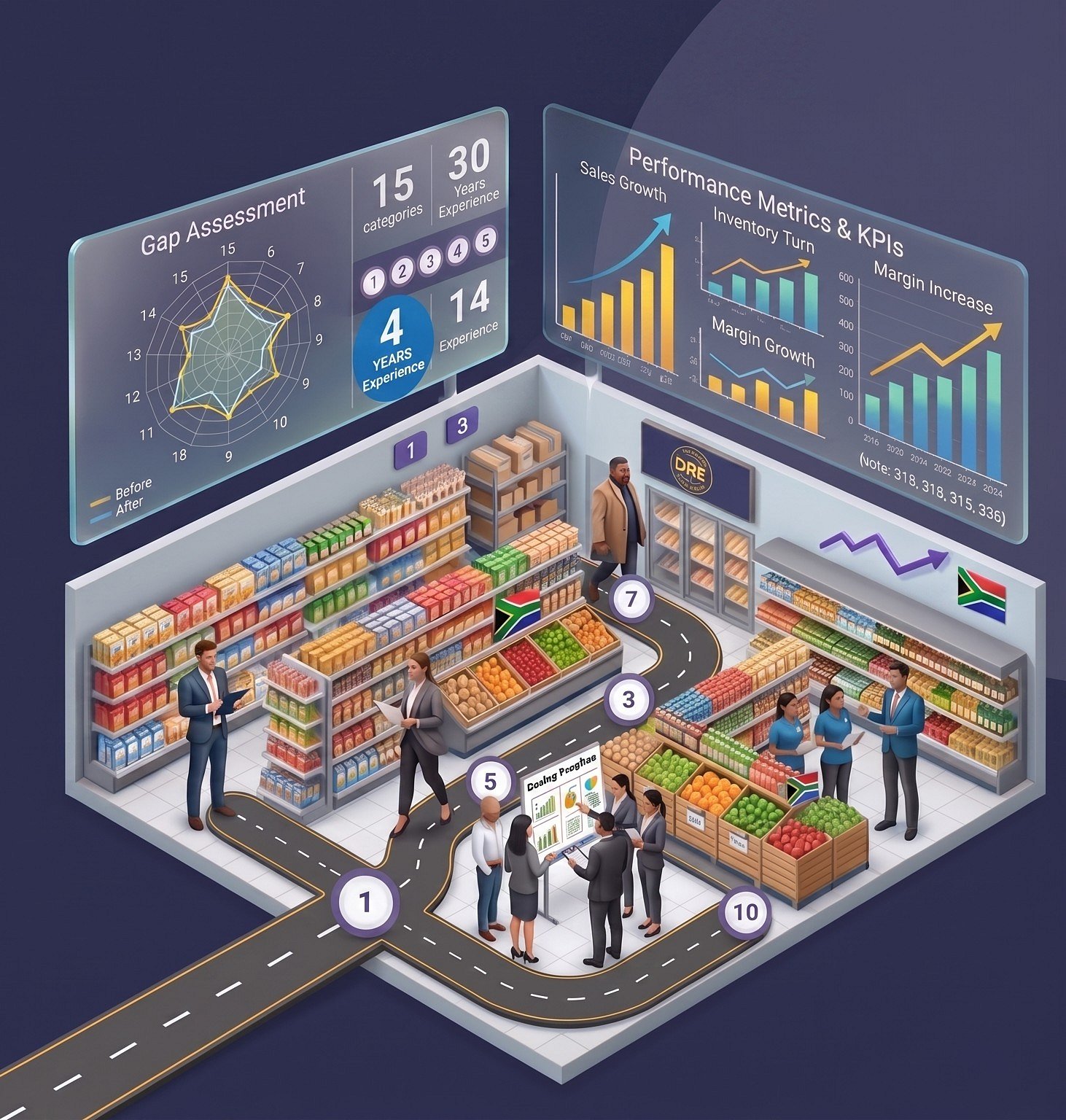
We analyze the entire lifecycle of a transaction. A transaction does not begin at the register—it begins the moment stock arrives at the back door. By mapping the exact physical steps a product takes from the delivery truck to the customer's hands, we identify layout bottlenecks and remove them.
"When you maximize the speed and accuracy of all facets of a transaction, you inherently lower the cost of doing business. Speed is a defensive mechanism against margin erosion."
The Bottom Line
Applying the Dell Principle means maintaining a dedication to measurement systems. You cannot eliminate friction if you aren't measuring where things slow down. At DRE, our ultimate goal is to help you detect, understand, and remove these friction points through process implementation.
Is your shopfloor full of friction?
Discover how DRE can streamline your supply chain from the receiving bay to the till point.
Start the Assessment